Steam Generator Room: Water, Drain and Service Clearance
Updated: 27 October 2026
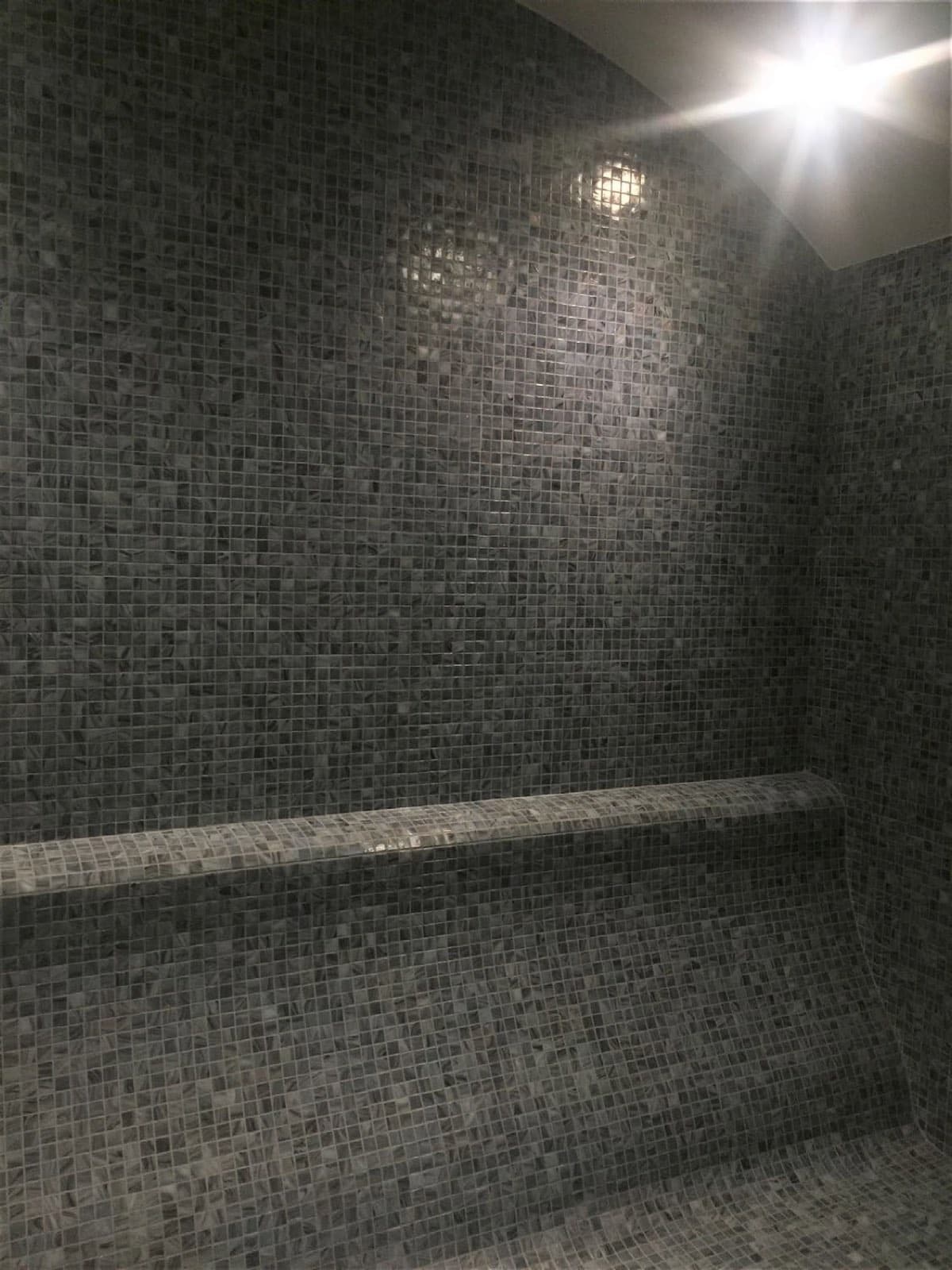
A steam room runs at 40–50 °C and close to 100 % relative humidity, and all of that steam comes from a generator in a small room next door. That room needs 4 things drawn before the walls go up: a cold water feed, a drain for hot flush water, a dedicated power supply and space to service the unit.
Where should the generator room be?
Close to the steam room, dry, ventilated and inside the building's frost-free zone: those 4 conditions decide the position. The shorter the steam line, the less steam condenses on its way, so the cupboard usually shares a wall with the steam room or sits across a corridor from it, never inside the wet room itself.
A generator is an electrical appliance with water inside it. It belongs in a space that stays dry when the steam room is washed down, with a floor drain or a drip tray under it and a door that opens fully. A ceiling void above a hotel corridor looks convenient on plan and becomes the problem room at the first service visit.
What does the water feed need?
The feed is 1 cold mains connection with an isolating valve, a strainer and backflow protection, so water from the generator can never run back into the drinking water supply. The water quality is measured on site, because hardness decides how fast scale builds up and how often the unit is serviced.
| Item | What we draw | Why |
|---|---|---|
| Isolating valve | within reach of the unit | service without draining the building |
| Strainer | before the inlet | grit damages the fill valve |
| Backflow protection | as the local water authority requires | the generator must not contaminate the supply |
| Water treatment | only if the manufacturer asks for it | some units run on softened water, some do not |
Why is the drain the hardest part?
A generator flushes itself, and the flush water leaves hot, so 1 ordinary plastic waste pipe is the wrong answer. The drain has to be rated for that temperature, or the water has to be cooled first, and it needs an air gap or tundish so the waste system can never siphon back into the unit.
The drain also needs a continuous fall and a trap that can be reached. On projects in the Gulf we check the drain route before anything else, because a building's waste stack is often further from the steam room than the architect expects.
How much space does servicing take?
Enough to open the front, lift the steam cylinder out and work with 2 hands: the manufacturer's installation manual gives the clearance for each model, and we draw that figure, not a guess. A unit squeezed into a cupboard that fits its body but not its service space will run, but nobody will maintain it.
Two more items belong in this room. The control cable runs from the generator to the panel by the steam room door, and the steam line leaves the unit with a steady fall so condensate flows back instead of collecting in a low point. Both are planned with the steam room layout, not after tiling.
Who does what?
We do not manufacture the generator: on the steam rooms we build it is a Condair unit, built and certified by its maker. Our part covers 3 jobs: sizing the unit against the real room, building the room and its services, and commissioning the result.
The split of roles is on our page about steam generator supply and installation. The same plant room logic applies to a Turkish hammam, whose room air also runs at 40–50 °C, and to a modern hammam with a steam supply.
Frequently asked questions
Can the generator go inside the steam room?
No. It is an electrical appliance and needs a dry, ventilated space. It sits outside the wet room, as close as the layout allows, so the steam line stays short and the unit stays reachable for service.
Does the generator need softened water?
It depends on the model. Some units are designed to run on softened water, others on untreated mains water with an automatic flush. We follow the manufacturer's requirement and measure the site water hardness before choosing.
Why does the drain need an air gap?
An air gap or tundish breaks the connection between the generator and the waste system. Without it, the drain could siphon water out of the unit or push waste water back towards it, which no water authority accepts.
Can one generator serve two steam rooms?
Sometimes, if the rooms are used together and the control allows it. Two rooms with different schedules usually get 2 generators, so each room reaches its temperature when it is booked rather than heating all day.
Who services the generator?
The installer who commissioned it, following the manufacturer's maintenance schedule. A service visit typically covers the cylinder, the fill and drain valves and the flush cycle, and it needs the clearance drawn at design stage.
Sources
- Steam bath generators, Condair
- Hardness of water, U.S. Geological Survey
- Backflow prevention device, Wikipedia
- Steam shower, Wikipedia
About the author. Sauna Dekor Spa Solutions · sauna, steam room, hammam and pool manufacturer since 1987 · 40 years of manufacturing in Istanbul · team of 19 · TS EN ISO 9001:2015 · 5,000+ projects in 41+ countries. We build the steam room and its services; the steam generator is built and certified by its manufacturer.


Yorumlar
Yorum Gönder