Snow Room, Ice Fountain or Cold Plunge Compared
Short answer: a snow room, an ice fountain and a cold plunge pool all cool guests down, but they ask very different things of a building. A snow room is an insulated room at about −10 °C with its own refrigeration. An ice fountain is a wall station fed by an ice maker. A cold plunge is a tank of chilled water with a chiller and filtration. Sauna Dekor builds all three; this note compares them station by station.
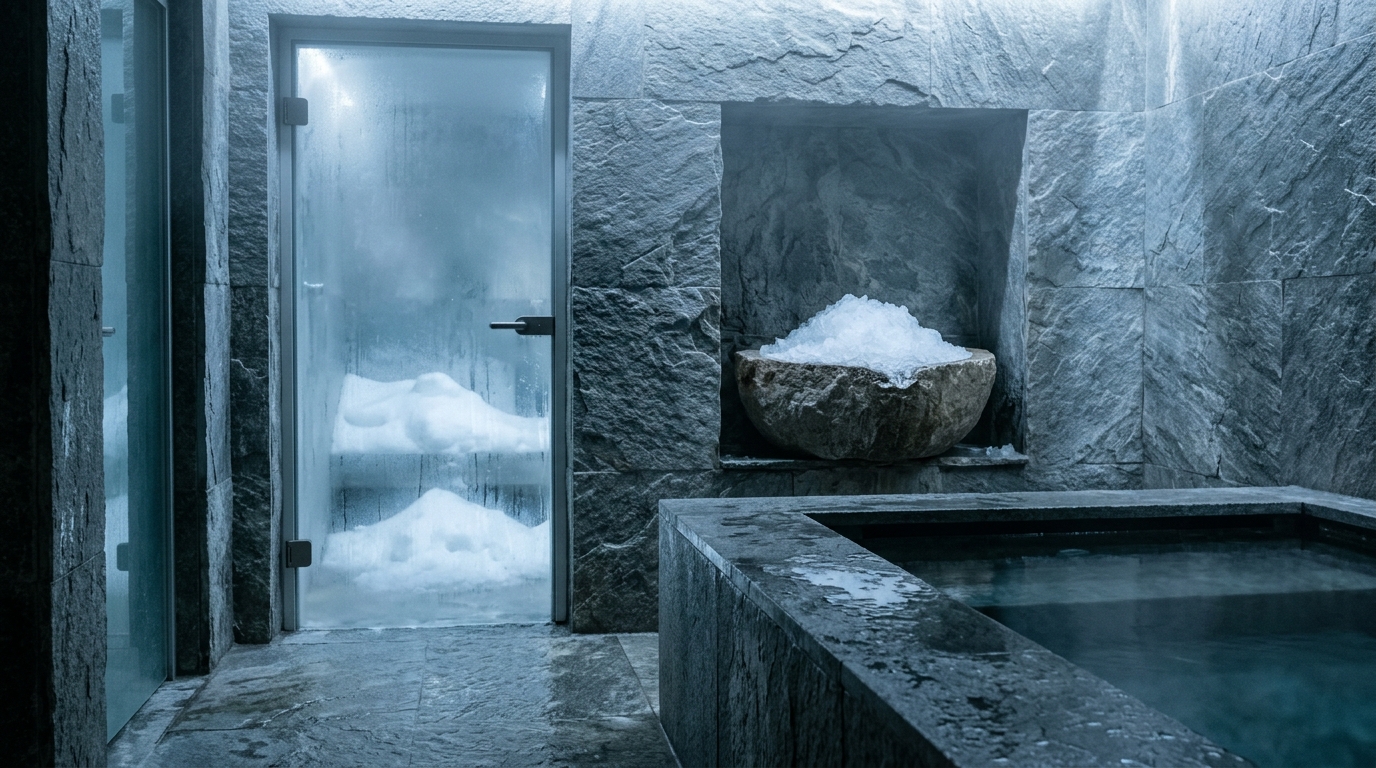
Updated: 7 October 2026
When a hotel or residence plans the cold side of a thermal suite, the question is rarely "which one is nicer". It is which station fits the floor area, the plant room, the drainage and the running budget that are actually available. The three stations below answer that question very differently, and the table further down puts them side by side.
What is the difference between a snow room, an ice fountain and a cold plunge?
The medium and the enclosure. A snow room is 1 closed, refrigerated room where guests walk in snow at about −10 °C. An ice fountain is an open station where guests take flake ice by hand. A cold plunge is a pool of water that guests step into. Each needs different plant behind the wall.
That difference in medium drives everything else. Snow and air at sub-zero temperature need an insulated, vapour-tight shell and a door. Flake ice needs an ice maker, a bowl and a drain for the meltwater, but no enclosure. Chilled water needs a watertight tank, a structural floor, a chiller and water treatment.
How much space does each cold station take?
From 1 wall niche to a full room. An ice fountain fits in a single wall niche. A cold plunge pool takes the tank footprint plus a dry walkway on at least 1 side. A snow room is a separate enclosure with its own door and a plant position nearby, so it is planned as a room, not a fixture.
In practice, the ice fountain is the station that can be added to an existing spa corridor or shower area. The cold plunge needs a floor that can carry it: water weighs about 1,000 kg per cubic metre, so a tank holding 2 m³ puts about 2 tonnes on the slab before the tank, the finishes and the guests are counted. The snow room is decided at the floor plan stage, because its shell, door and refrigeration take space that cannot be found later.
What plant room and equipment does each station need?
3 different machines. A snow room needs a snow-making unit and a refrigeration system with a condenser placed outside the cold enclosure. An ice fountain needs an ice maker, usually a flake ice machine, in a plant room or a ventilated cabinet. A cold plunge needs a chiller, a circulation pump, filtration and dosing.
For snow rooms we work with TechnoAlpin as our technology partner, and the snow-making unit is TechnoAlpin's product. The chiller on a cold plunge and the ice maker behind an ice fountain are likewise the products of their makers; we design the enclosure, the pipework and the integration around them. The common rule for all three is that the heat removed from the cold station has to be rejected somewhere, which means a condenser or a heat exchanger with its own air or water supply.
How do water supply and drainage differ between the three?
A snow room uses little water but always needs a meltwater drain. TechnoAlpin states that 1 litre of water makes about 5 litres of snow and that weekly use is about 200 litres. An ice fountain needs a water feed to its ice maker and a drain under the bowl. A cold plunge needs a fill line, an overflow and an emptying drain.
The drainage is where cold stations most often go wrong on site. Snow melts during the defrost cycle, and that water has to leave the room through a heated or protected drain so that it does not freeze in the trap. Flake ice in a bowl melts continuously, so the bowl drain runs whenever the station is in use. A cold plunge holds its water for longer, but it is emptied for cleaning, and the drain has to take the whole volume at a rate the building's drainage can accept.
Which energy items should an operator budget for?
2 or 3 items per station. A snow room runs refrigeration and periodic snow making; TechnoAlpin states that up to 80 % of the electrical energy used can be recovered through heat recovery, for example to heat a pool. An ice fountain runs an ice maker. A cold plunge runs a chiller and a circulation pump.
How much each costs to run depends on the setpoint, the hours of operation and the room around it. We build cold plunge pools for water temperatures from 2 to 15 °C, and the chiller is sized for the setpoint the operator chooses within that range and for the heat entering the water from the room and from guests. An ice maker's load follows how much ice guests take. A snow room's refrigeration runs continuously, which is why heat recovery to a pool or hot water system is worth designing in from the start.
Three cold stations compared
| Snow room | Ice fountain | Cold plunge pool | |
|---|---|---|---|
| Cold medium | Snow and air at about −10 °C (TechnoAlpin) | Flake ice taken by hand | Chilled water; we build for 2 to 15 °C |
| Space | A separate room with its own door | A single wall niche | Tank footprint plus a dry walkway |
| Enclosure | Insulated, vapour-tight shell | None; open station | Watertight tank, structural floor |
| Plant and equipment | Snow-making unit, refrigeration, condenser outside the room | Ice maker (flake ice machine) | Chiller, pump, filtration, dosing |
| Water supply | Low; about 200 litres a week (TechnoAlpin) | Feed to the ice maker | Fill line and top-up |
| Drainage | Meltwater drain protected from freezing | Drain under the bowl, runs in use | Overflow and full emptying drain |
| Energy items | Refrigeration, snow making, defrost; heat recovery possible | Ice maker | Chiller and circulation pump |
| Maintenance | Defrost schedule, drain checks, door seals | Ice maker cleaning, bowl and drain | Water testing, filter cleaning, periodic emptying |
| Guest flow | Walk in, walk out; capacity set by room size | Several guests a minute, standing | One or a few guests at a time |
How does maintenance compare?
Of the 3, the ice fountain has the lightest routine and the cold plunge the heaviest. An ice maker is cleaned to its maker's schedule. A snow room runs on an automatic snow and defrost programme, with drains and door seals checked. A cold plunge needs routine water testing, filter cleaning and periodic emptying.
The cold plunge carries the water quality duty of any pool used by many people. The World Health Organization's guidance on pools and similar environments sets out the operator's responsibilities for treatment and monitoring, and a cold plunge in a hotel falls under that logic even though the water is cold. A snow room avoids standing water entirely; TechnoAlpin describes a fresh layer of snow made each night, with snowing and defrosting times set by a scheduler.
How does each station affect guest flow?
Very differently. An ice fountain serves several guests a minute, each standing at the bowl for a few seconds. A cold plunge serves 1 or a few guests at a time and needs space for them to enter and leave safely. A snow room holds a group, so the room size sets how many guests can use it at once.
This is often the deciding factor in a busy spa. A hotel with many guests leaving the sauna at the same time may place an ice fountain beside the sauna door so that nobody queues, and keep a cold plunge for guests who want a longer cold stop. A snow room works as a destination in its own right, and its door and its floor need to cope with wet feet arriving from the hot rooms. Our earlier note on the cold room of a thermal suite covers where these stations sit in the plan.
Which cold station fits which project?
It follows the building more than the brochure. Where only 1 niche is available, an ice fountain. Where the slab can carry a tank and a plant room is close, a cold plunge. Where the plan allows a dedicated room and a plant position for refrigeration, a snow room. Many projects combine 2 of the 3.
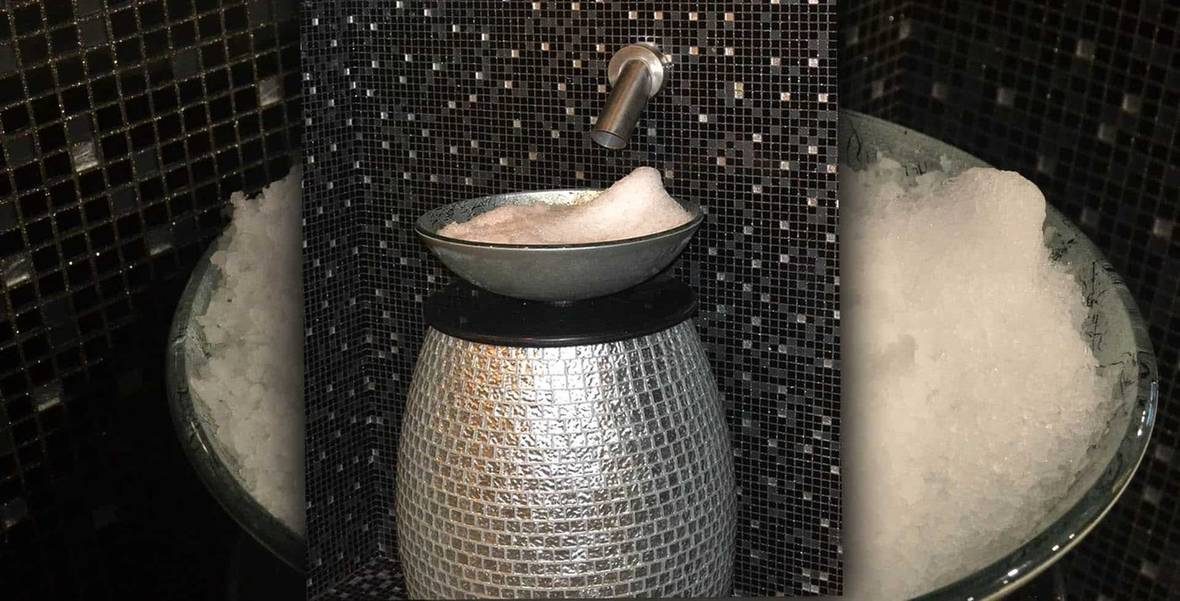
At Gumush Residence in Baku the spa combines a hammam, a sauna, steam rooms, an ice fountain and a shock bucket, with the ice fountain set in a mosaic niche of the wet area. For snow rooms, our snow room page sets out the insulated shell, vapour barrier, condenser position and meltwater drainage, and our note on snow rooms in Dubai covers the refrigeration behind them in a hot climate. For cold plunge pools, our cold plunge selection guide explains why the chiller, insulation and water treatment matter more than the tub. The full scope of the Baku project is on the Gumush Residence spa portfolio page.
Who is writing this
Sauna Dekor has designed and built saunas, steam rooms, hammams, snow rooms, cold plunge pools and pools since 1987: 40 years of manufacturing in our own facility at İkitelli OSB, Istanbul, with 19 employees, 5,000+ projects and work delivered in 35+ countries. Our quality system is certified to TS EN ISO 9001:2015 (certificate no 202025106, EKOL Belgelendirme, valid to 19.06.2027).
Our cold-side work includes the ice fountain and shock bucket at Gumush Residence in Baku and the steam room and ice fountain at the Emaar Square SE-ND block in Istanbul. We do not manufacture snow-making units, chillers or ice makers: the snow technology is TechnoAlpin's product, and each chiller and ice maker belongs to its maker, with that maker's certification. Warranty: 24-month warranty on workmanship and manufacturing; 24-month manufacturer's warranty on electrical and mechanical equipment; 5-year warranty on structure and waterproofing. Contact: +90 532 215 64 78.
Frequently asked questions about snow rooms, ice fountains and cold plunges
How cold is a snow room?
About −10 °C, the figure TechnoAlpin gives for its snowroom, with fresh snow made each night. The room is an insulated, vapour-tight enclosure with its own door, and its refrigeration condenser sits outside the cold space.
Does an ice fountain need a drain?
Yes. Flake ice in the bowl melts continuously while the station is in use, so a drain under the bowl is part of the design. The ice maker also needs a water feed and space for its own condensing heat to escape.
Can a cold plunge be added to an existing spa?
Often, if the slab can carry it and a plant position is close. Water weighs about 1,000 kg per cubic metre, so the structural engineer checks the floor first, then the chiller, filtration and drainage routes are planned.
Which cold station needs the least space?
The ice fountain. It fits in a single wall niche and needs no enclosure, only an ice maker nearby, a water feed and a drain. That is why it is often the station added when a spa is refurbished.
Does a snow room use a lot of water?
No. TechnoAlpin states that 1 litre of water makes about 5 litres of snow and that weekly use is about 200 litres. What a snow room does need is a meltwater drain protected from freezing for each defrost cycle.
Can a project combine all three cold stations?
Yes, in larger thermal suites. Many projects combine 2 of the 3, such as an ice fountain beside the sauna and a cold plunge nearby. A snow room is added where the plan has room for a separate enclosure and its refrigeration plant.
Sources
- SNOWROOM: A room at −10 °C and real snow — TechnoAlpin. Snow room at −10 °C, fresh snow each night, 1 litre of water to about 5 litres of snow, about 200 litres a week, up to 80 % of electrical energy recoverable, scheduler for snowing and defrosting. The figures belong to TechnoAlpin.
- Flake ice — Wikipedia. The form of ice an ice fountain is usually filled with, and how flake ice machines produce it.
- Chiller — Wikipedia. How a chiller removes heat from a liquid and rejects it through a condenser, as on a cold plunge pool.
- Vapor barrier — Wikipedia. Why a cold, insulated enclosure such as a snow room needs a vapour barrier on its warm side.
- Guidelines for safe recreational water environments, Volume 2: Swimming pools and similar environments — World Health Organization. Operator duties for water treatment and monitoring in pools used by many people.


Yorumlar
Yorum Gönder